Why A Hybrid Drumming Setup Works
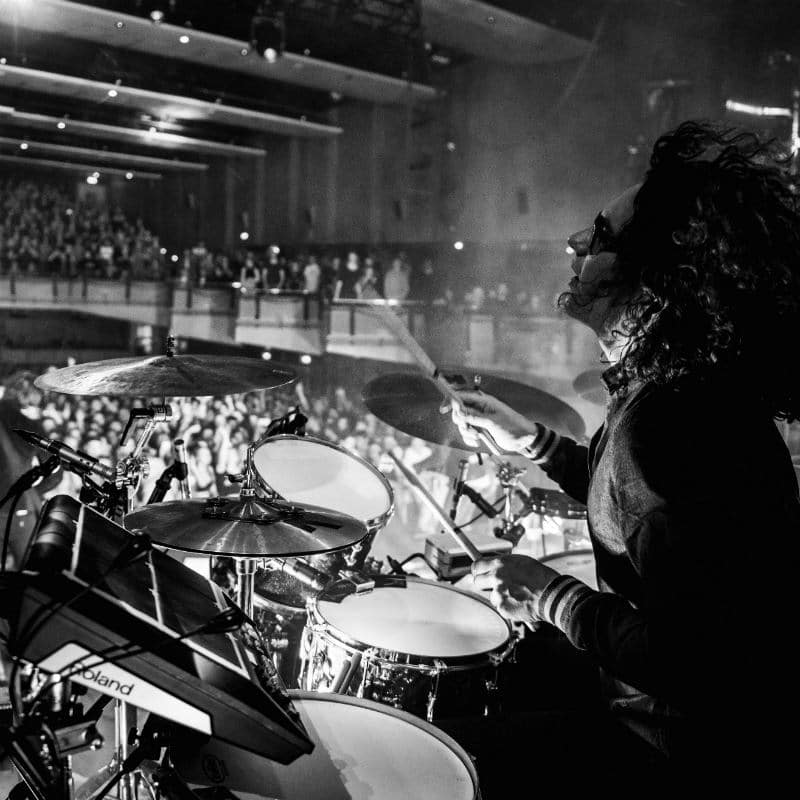
There is a reason why so many world-class drummers harness the power and potential of a hybrid drumming setup. Artists truly gain a competitive edge in drumming with enhanced sound layering, expansive possibilities, and unparalleled versatility.
It’s easy to believe that hybrid drums are out of reach for the average drummer. However, this couldn’t be further from the truth. In fact, dismissing the world of hybrid drums means missing out on an exhilarating movement that has the power to revolutionize your drumming experience.
So, what exactly are hybrid drums, and how can they benefit you as a drummer? Let’s delve into the realm of hybrid drums and discover the exciting possibilities they offer.
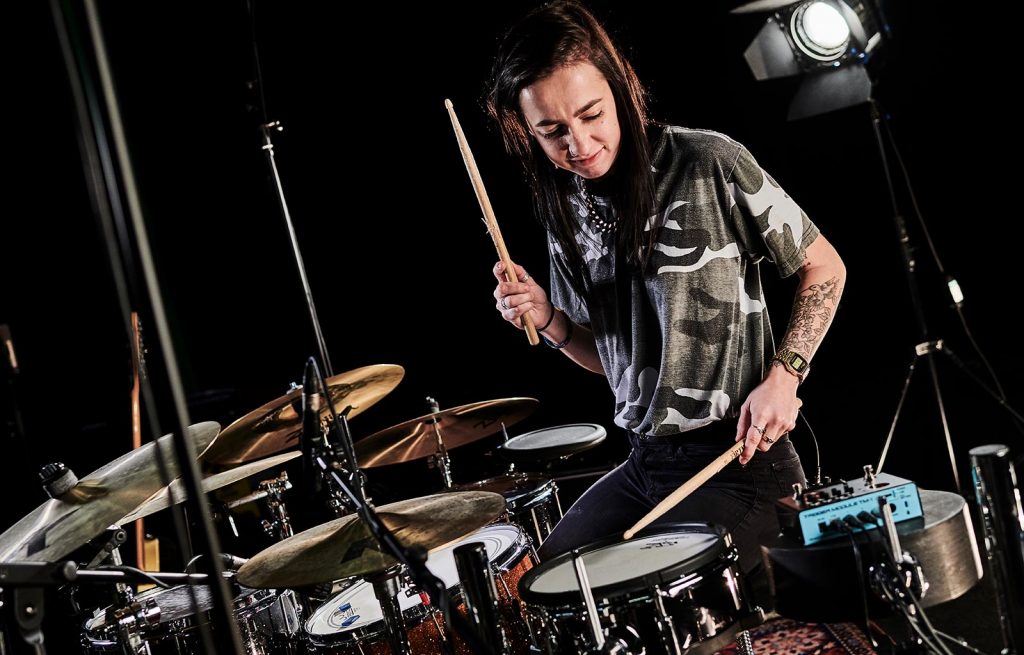
As musical tastes continue to evolve and playing styles transcend boundaries, drummers are no longer confined to specific genres like rock or pop. Whether you’re a casual drummer, a semi-professional musician, or aspiring to reach new heights, your drum set needs to be flexible and versatile enough to produce a wide range of sounds that cater to your band’s needs or potential job opportunities.
Hybrid Drums of the Past, Present, and Future
The concept of the hybrid drum kit, combining acoustic and electronic drums into one versatile setup, has been around for decades. From ’70s rock legends to modern-day pop session stars, musicians have utilized hybrid drums to enhance their acoustic sounds and incorporate loops and samples. Moreover, the advancement of electronic percussion technology has made it easier for drummers to integrate electronic elements into their acoustic rigs, enhancing both live performances and recordings. If you already own a drum module and an electronic trigger or pad, you’re well on your way to becoming a hybrid drummer.
There are three primary applications of hybrid drums that we’ll explore in this guide:

- Enhancing Acoustic Kit Sounds:
While a well-tuned acoustic drum kit can sound fantastic, the overall sound is influenced by various factors such as the playing environment and the drumheads being used. By introducing acoustic triggers and a sound module like the Roland TM-2 into your setup, you can seamlessly blend electronic tonal elements with your acoustic sound. Enhance the low-end of your kick drum, extract more attack from your toms, add crispness to your snare, and achieve a consistent, full, and pristine drum sound every time you play. - Layering Acoustic and Electronic Sounds:
In this approach, your acoustic drum kit remains at the core of your sound, but you have the ability to layer a second, full electronic sound on top using triggers and a module. The possibilities are endless—you can choose to layer a tambourine sample over your snare or trigger a reverb-drenched kick sample whenever you strike your compact 18-inch kick drum. To witness the effectiveness of this approach, check out the “Hybrid Drum Battle” video featuring Roland artists Michael Schack and Dirk Brand, where they showcase the power of enhanced, expanded, and layered sounds. - Expanding the Variety of Sounds:
Occasionally, certain songs require sounds that might not be readily available in your acoustic arsenal. Whether it’s a cowbell, clave, additional snare or cymbal, or even electronic elements like an 808 kick or vocal sample, a single electronic pad and module can fulfill all your sonic requirements. Pads open up a world of possibilities, making you an invaluable asset as a drummer.
Now, let’s explore each approach in detail:
Enhance:
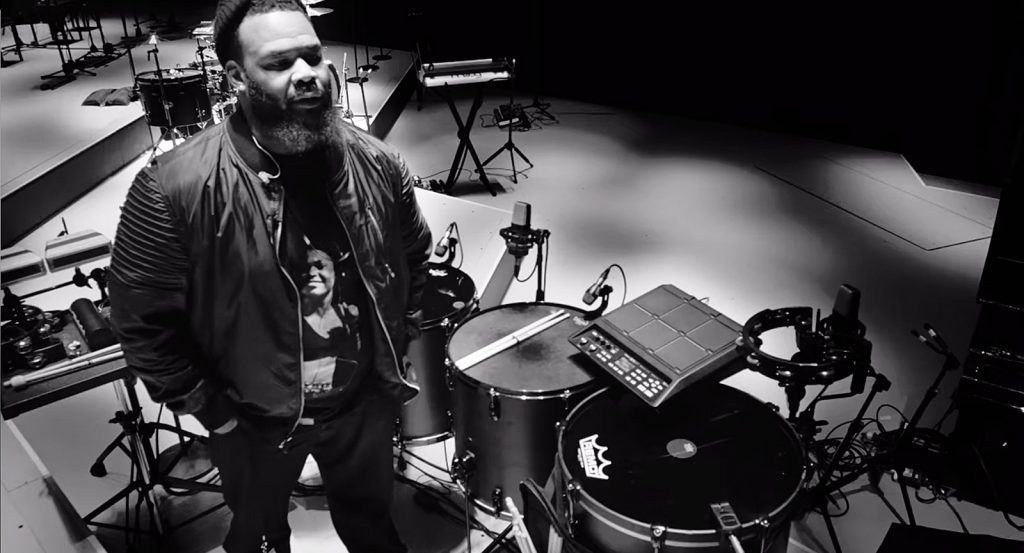
Drummers are constantly searching for ways to enhance their acoustic drum sound, whether on stage, in the studio, or during practice sessions. However, there’s only so much tweaking you can do before the sound starts to feel unnatural, and these fixes often consume valuable drumming time. By introducing basic electronic hardware, you can enhance the core sound of your acoustic drums in any playing scenario.
For instance, using a Roland RT-30K bass drum trigger and an RT-30HR trigger on your snare drum, connected to a Roland TM-2 trigger module, opens up a world of tonal enhancement options. These enhancements, referred to as “Elements,” can be accessed from the module itself or from your own samples via an SD card. Want more powerful bass on your kick drum or increased attack on your toms? It’s all within your grasp. By incorporating electronic elements, your drums will still feel natural, but your overall sound will be fuller and cleaner without compromising volume.
Layer:
In addition to enhancing your acoustic drum sound, you can also explore the art of layering to further enrich your setup. To achieve this, you’ll employ the same electronic elements used for enhancing your acoustic sounds—triggers on drums connected to a module. However, instead of blending subtle tonal elements, you’ll be mixing full samples or sounds with your acoustic drum sound. This can include anything from incorporating an 808 snare drum, handclaps, tambourine, or even a mixed sample of your band’s latest demo comprising kick, snare, and tom sounds.
Layering becomes an invaluable tool for drummers, particularly those who perform cover songs. While your trusty acoustic kit remains the centerpiece, you can now change your kick, snare, and toms from song to song, recreating the drum sounds of classic recordings that were crafted in multi-million-pound studios. To demonstrate the power of layering, watch Roland artists Michael Schack and Dirk Brand in the video, where they showcase acoustic sounds layered with full electronic samples.
Expand:
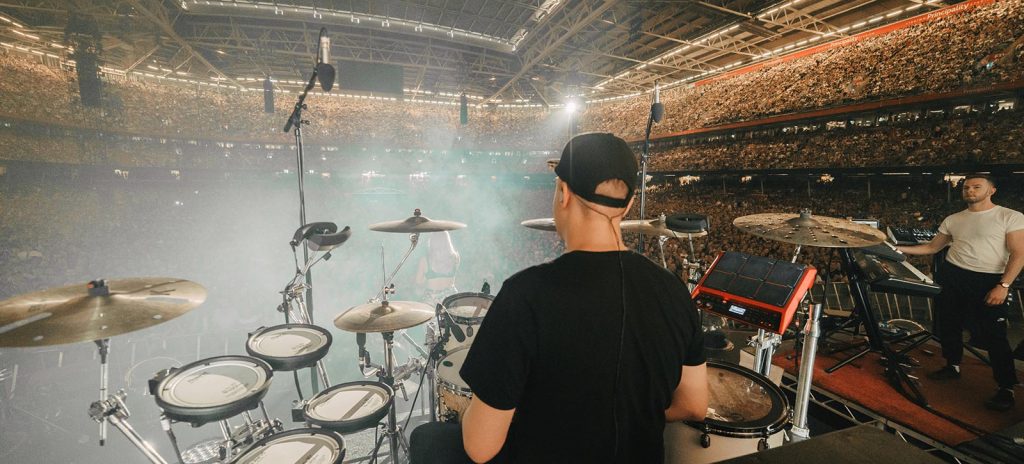
Drummers have a natural inclination to explore and expand their sound options, often amassing an array of instruments to add to their kit. However, sometimes the sounds available from acoustic drums, cymbals, and percussion aren’t sufficient to meet the demands of a particular gig or musical piece. This is where incorporating elements of electronic gear into your acoustic setup becomes invaluable, allowing you to explore limitless sonic options while reducing the physical load.
Expanding your sound with a hybrid setup differs from enhancing your existing acoustic sounds. In this approach, you’re not blending acoustic and electronic sounds using triggers and a module. Instead, you’re introducing small, independently placed pads like the Roland BT-1 bar trigger or PD-8 Dual Trigger pad to your acoustic kit and assigning any sound, texture, or backing tracks via a module. Whether your song calls for a cowbell, a soaring vocal sample, or an 808 kick and snare in the verse, you can easily set up your pads and trigger away.
For a more streamlined approach to expanding your sound options, consider the SPD::ONE series. These single-pad triggers with integrated sample engines provide plug-and-play sound additions to any drum kit setup, offering versatility in a compact form. If you’re ready to take it to the next level, tools like the Octapad or SPD-SX offer convenience and power with onboard sounds and a multitude of built-in pads, giving you the freedom to explore and perform your own unique sounds.
Choosing Your Hybrid Sound Source:
Now that you’re familiar with the concepts of “enhance,” “layer,” and “expand,” it’s essential to select the right gear that aligns with your goals and setup. Whether you aim to reinforce your acoustic drums with samples for a polished, studio-quality sound on stage or seek more extensive integration of triggers and pedals, choosing a sound module that can deliver the desired results is crucial.
For those looking to reinforce their acoustic drums with samples, the Roland TM-2 could be the ideal choice.
The TM-6 PRO takes this concept even further by allowing integration of more triggers and pedals, and it features a synchronized, multi-channel click and backing track audio streaming engine.
The SPD-SX Sampling Pad has become one of the most ubiquitous instruments for drummers and live performers, offering powerful onboard tone and instrument libraries. The Roland SPD-30 Octapad, with its extensive sound library, is another powerful tool for expanding your drumming setup.
The Future of Drums is Now
Constant development and innovation have led to the creation of the TD-50, a flagship module that combines all the advancements in trigger technologies into one unit. With multi-channel, balanced audio outputs, professional features, complete editability, and a powerful effects engine, the TD-50 sets a new standard for drum modules. Drummers can enjoy unparalleled versatility with analog and digital trigger inputs, user sample load for layering and enhancing acoustic and electronic kits, and many more cutting-edge features.
In conclusion, hybrid drums offer drummers of all levels the opportunity to unlock their full potential. Whether you aim to enhance your acoustic drum sounds, layer electronic elements, or expand your sonic options, hybrid drums provide the tools and flexibility to achieve your desired sound. Embrace the exciting world of hybrid drums and elevate your drumming to new heights.